Every buying season, we get some version of the same question from a new importer: "your charcoal isn't activated carbon, right?" It used to feel like a formality. In 2026, it's the first line item on almost every RFQ we receive — and the buyers asking it have usually already been burned once by a supplier who blurred the line.
The Activated Carbon Problem
Activated carbon and non-activated shell charcoal are made from the same raw material — coconut shell — but they're processed differently, priced differently, regulated differently, and used for entirely different purposes. Activated carbon goes through a secondary chemical or steam-activation step to open its pore structure for filtration and adsorption applications. Shisha charcoal, BBQ charcoal and most industrial fuel-grade charcoal never need that step, and buyers who unknowingly receive activation-grade material — or unknowingly resell it as something else — can run into real compliance and labelling problems downstream.
As a direct Sri Lanka coconut charcoal manufacturer, we've built our entire production line around one hard rule: Sanis Eco does not manufacture, sell, or market activated carbon in any form. Every kiln we run is calibrated for non-activated output only.
What "Non-Activated" Actually Means On A Spec Sheet
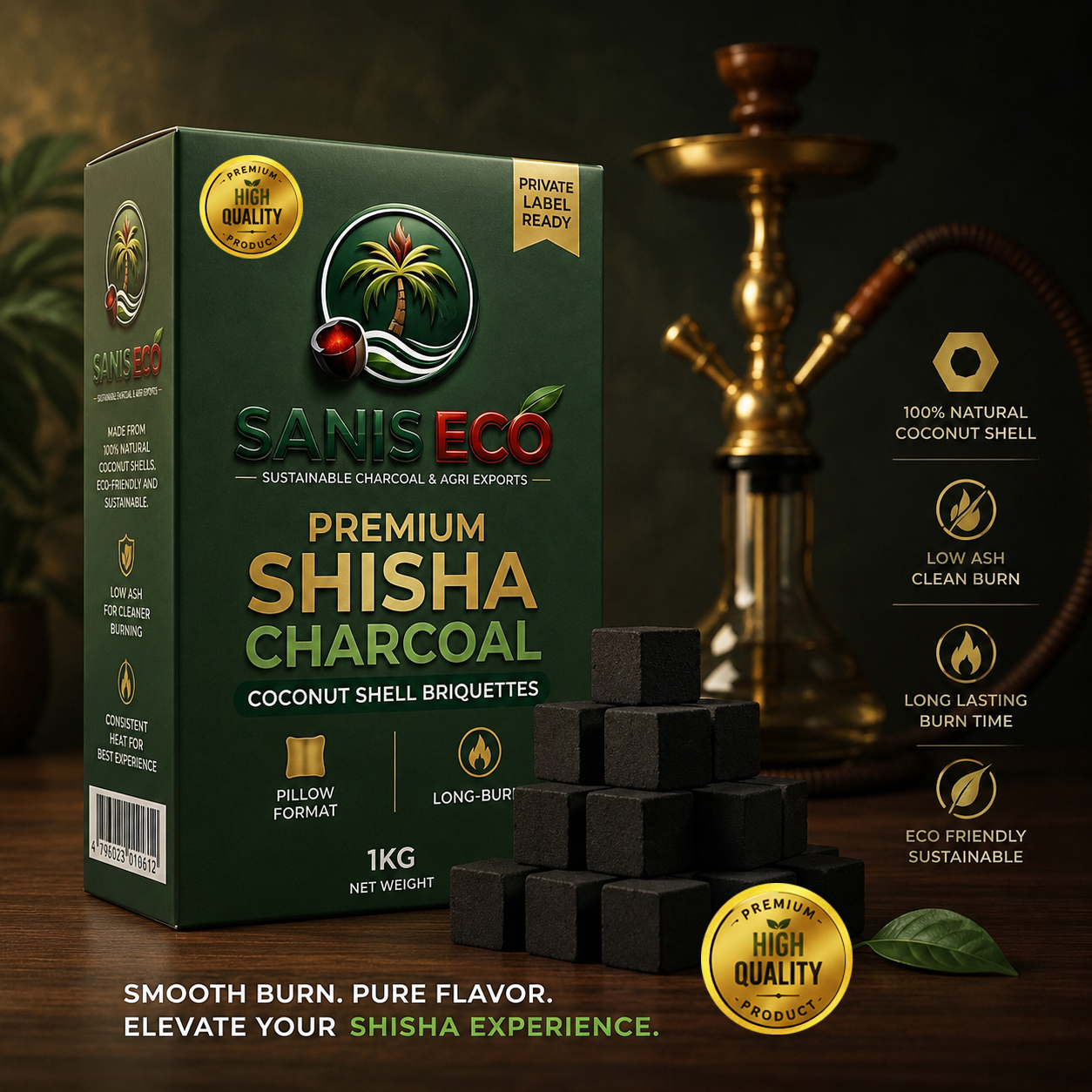
Buyers increasingly want this stated in writing, not just implied. When we quote a container of coconut charcoal briquettes for shisha export or a load of raw coconut shell charcoal, the accompanying spec sheet documents burn time, ash content, moisture percentage and fixed carbon — the numbers that actually describe how the product performs, rather than a vague "eco-friendly" claim.
"Buyers don't need another trading house. They need a Sri Lanka coconut charcoal manufacturer who answers the phone, ships what was sampled, and never once mentions activated carbon." — Sanis Eco Export Desk
What Buyers Are Asking For Now
Talking to shisha lounges, BBQ brands and industrial buyers placing orders this year, a few requirements come up in almost every conversation:
- Written confirmation that the product is unactivated coconut shell charcoal, not just verbal assurance
- A documented spec sheet — burn time, ash content, moisture — before, not after, booking
- Traceability back to a real shisha charcoal supplier Sri Lanka manufacturing facility, not a reseller
- Consistent quality across repeat containers, so a sample never differs from a shipment
- A supplier who can explain the non activated coconut shell charcoal export process in plain terms, not marketing language
How Sanis Eco Documents Every Shipment
We manufacture our bbq charcoal briquettes bulk supplier lines and our low ash bbq charcoal briquettes exporter lines ourselves — from raw coconut shell sourcing through carbonization to a packed container — so there's no point in the chain where the product could be substituted or blended with anything else. Every consignment leaves Colombo with the same spec sheet the buyer approved during sampling, and we're glad to walk any new importer through our kiln process before they place a first order.
If your current charcoal supplier can't answer the activated-versus-non-activated question in writing, that's usually worth a second look before your next container books.