Fire — Item 04
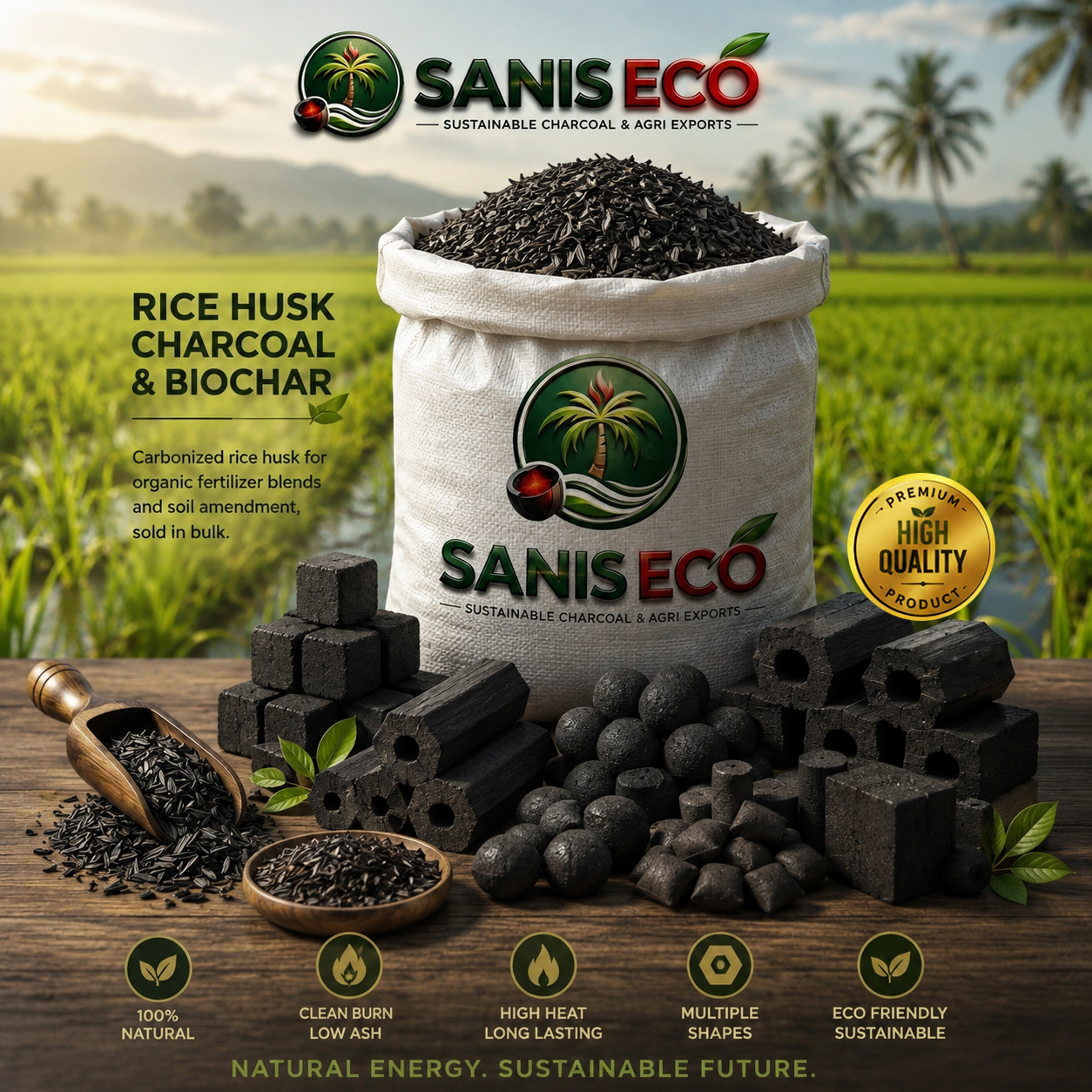
Rice Husk Charcoal & Biochar
Carbonized rice husk for organic fertilizer blends and soil amendment — sold in bulk for agricultural and industrial buyers.
- Made from carbonized rice husk — a rice-milling by-product
- Improves soil water retention and cation exchange capacity
- Contributes to long-term carbon sequestration in soil
- Supplied in multiple formats: loose, briquetted or pelletized
 Fire
Product Overview
What It Is & How It's Made
Rice husk charcoal, often referred to as rice husk biochar, is produced by carbonizing the husks removed during rice milling — one of the highest-volume agricultural residues in Sri Lanka. Rather than being burned openly or left to decompose, the husk is converted into a stable, carbon-rich material that can be reintroduced into agricultural systems.
As a soil amendment, biochar improves water retention and nutrient exchange capacity in the soil, supports beneficial microbial activity, and locks carbon into a stable form for the long term — making it a popular input for organic fertilizer blends, nursery growing media, and soil remediation projects. It's supplied loose, or pressed into briquette and pellet formats for easier handling and blending.
Where It's Used
Applications & Uses
Organic Fertilizer Blending
A core carbon input for organic fertilizer and soil conditioner producers.
Soil Amendment
Improves water retention and nutrient exchange in agricultural soil.
Nursery Growing Media
Blended into potting mixes for improved structure and drainage.
Industrial Fuel
Alternative solid fuel source where biochar is not the end use.
Specification Sheet
Technical Specifications
Figures shown are typical ranges for this product category. A full certificate of analysis (COA) ships with every order.
| Attribute | Typical Value |
|---|---|
| Form | Loose granules, briquette or pellet |
| Carbon Content | High, typical for rice husk char |
| Ash Content | Higher silica content typical of rice husk |
| Moisture Content | ≤ 10% (typical) |
| Bulk Density | Varies by format — loose vs. compressed |
| Primary Use | Biochar / soil amendment / fuel |
| Packaging | Bulk bags, jumbo bags |
| Private Label | Not applicable — bulk agricultural supply |
Packaging & Private Label
Packaging Options
Supplied in bulk formats suited to agricultural and industrial buyers, with loose, briquette and pellet options available depending on your blending or handling process.
- Bulk jumbo bag (1 tonne) loading
- Loose, briquette or pelletized format
- Custom moisture specification on request
- Regular offtake agreements available
Common Questions
Frequently Asked Questions
What's the difference between charcoal and biochar here?
They're the same base material — carbonized rice husk — marketed as 'charcoal' for fuel use or 'biochar' when the intended application is soil amendment.
Can this be blended directly into fertilizer?
Yes, it's commonly used as a carbon input in organic fertilizer and soil conditioner formulations.
What format is best for my use case?
Loose granules suit direct soil blending; briquette or pellet formats are easier to handle, store and transport in bulk.
What's the typical order size?
This is sold in bulk against an FOB price — contact our export desk with your target volume for a quote.
You May Also Need